
What to Check During a Property Site Visit – 20 Things Buyers Miss
Table of Contents
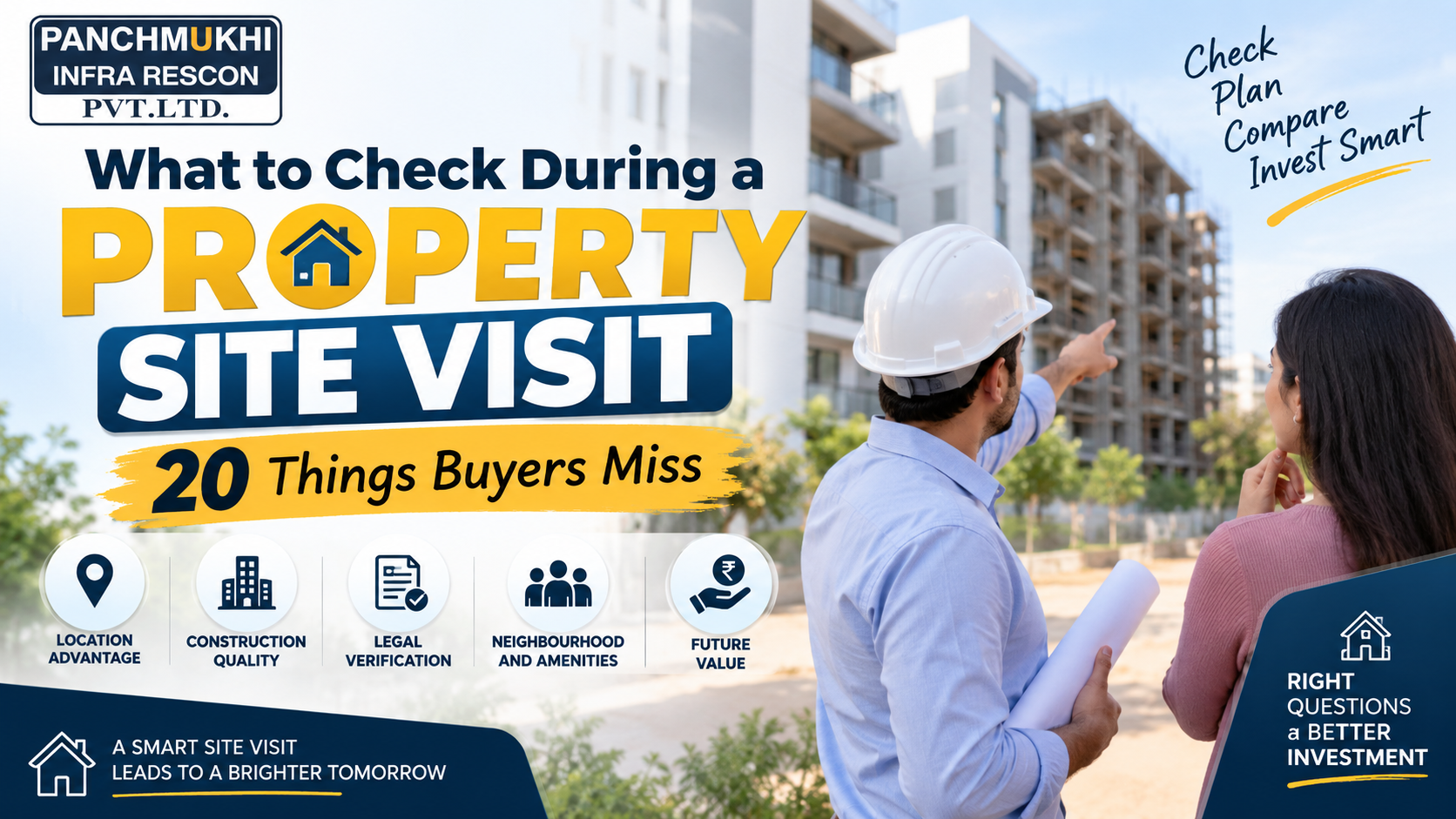
Buying property is one of the most significant financial decisions you’ll make in your lifetime. Yet many buyers rush through site visits, focusing only on aesthetics and basic features while missing critical structural, legal, and environmental issues. This comprehensive guide highlights the 20 most overlooked factors during property inspections—mistakes that could cost you thousands later.
At Panchmukhi Infra Rescon, we’ve helped hundreds of buyers navigate property purchases successfully. Here’s what professional inspectors and experienced buyers actually check.
1. Foundation and Structural Integrity
Why It Matters: The foundation is your property’s backbone. Cracks, settling, or water damage can lead to expensive repairs costing lakhs.
What to Check:
- Walk the perimeter and look for visible foundation cracks (hairline cracks are normal; larger cracks warrant professional inspection)
- Check for uneven floors by placing a ball on different surfaces
- Look for gaps between walls and doors/windows
- Inspect basement or ground-level areas for water seepage or dampness
- Check if walls lean or show signs of bowing
Most buyers skip this entirely, focusing instead on paint color and furniture placement.
2. Water Damage and Moisture Issues
Why It Matters: Hidden moisture leads to mold, structural decay, and health hazards that are expensive to remediate.
What to Check:
- Inspect ceilings and walls for water stains (brown, yellowish discoloration)
- Smell for musty odors in bathrooms, basements, or corners
- Check under sinks and around water-using appliances
- Look for peeling paint or wallpaper
- Press walls gently—soft spots indicate water damage
- Examine window sills and corners for dampness
3. Electrical System Safety
Why It Matters: Outdated or faulty electrical systems are fire hazards and costly to upgrade.
What to Check:
- Note the age of the electrical panel/fuse box (older than 40-50 years may need replacement)
- Count electrical outlets in each room (modern standards require adequate outlets)
- Test light switches to ensure they work smoothly
- Check for exposed wiring or temporary electrical solutions
- Look for signs of overloaded circuits (discolored outlets, melted plastic)
- Verify adequate grounding (three-pronged outlets in kitchen/bathroom)
4. Plumbing and Water Supply Quality
Why It Matters: Plumbing issues are expensive and frequent in older properties.
What to Check:
- Test water pressure by running multiple faucets simultaneously
- Check water color and smell for contamination
- Turn on taps and observe drain speed
- Inspect visible pipes under sinks for leaks or corrosion
- Ask about the age of pipes (copper is better than galvanized; PVC is modern)
- Check water heating capacity (tank size matches family needs)
- Look for water meters and understand municipal charges
- Verify sewage system type (municipal or septic)
5. Roof Condition and Lifespan
Why It Matters: Roof replacement costs ₹50,000–₹2,00,000+. Knowing its condition is crucial.
What to Check:
- Use binoculars to inspect roof from the ground (or ask permission to access safely)
- Look for missing, cracked, or curled tiles/shingles
- Check for algae or moss growth (indicates moisture)
- Inspect flashing around chimneys and vents
- Ask when the roof was last replaced
- Look inside the attic for water leaks or light penetration
- Check gutters for debris and damage
6. Pest and Termite Infestation
Why It Matters: Termites cause structural damage that compounds over time. Early detection is critical.
What to Check:
- Look for termite mud tubes on walls and foundations
- Inspect wooden beams in basements and attics for tunnels
- Listen for clicking sounds (termite activity)
- Check for droppings or frass (termite waste)
- Look for wood damage or hollow-sounding wood
- Ask for pest control certificates or treatment history
- Smell for pest odors in enclosed spaces
7. HVAC System (Heating, Ventilation, Air Conditioning)
Why It Matters: HVAC replacement costs ₹75,000–₹3,00,000+. System age is critical.
What to Check:
- Ask the age of AC and heating units
- Test AC by running it (cool air flow, unusual noises?)
- Check furnace/boiler condition and fuel type
- Inspect ductwork for leaks or disconnections
- Look for rust or corrosion on equipment
- Verify maintenance records are available
- Check thermostat functionality
8. Windows and Door Sealing
Why It Matters: Poor sealing increases energy costs and water infiltration.
What to Check:
- Open and close all windows—do they operate smoothly?
- Check for broken seals (condensation between panes)
- Look for rot in wooden frames
- Verify weatherstripping is intact
- Check door alignment and lock functionality
- Look for drafts around frames
- Inspect for cracks in glass
9. Legal Documentation and Clearances
Why It Matters: Legal issues discovered after purchase are unresolvable and financially devastating.
What to Check (before or after site visit):
- Request property title deed and ownership proof
- Verify no pending litigation against the property
- Check municipal tax payment records
- Confirm no structural violations reported
- Ask about NOCs (No Objection Certificates) from relevant authorities
- Verify property boundaries match legal documentation
- Check for encroachment disputes with neighbors
- Confirm the seller has clear title (no inherited claims)
[INTERNAL LINK: /legal-property-verification “property verification checklist”]
10. Neighborhood and Environmental Factors
Why It Matters: Neighborhood quality affects property value, safety, and quality of life.
What to Check:
- Visit the area at different times (morning, evening, night)
- Check proximity to highways, railways, or industrial areas (noise pollution)
- Observe traffic patterns and congestion
- Look for nearby waste dumps or water bodies (flooding risk)
- Check groundwater levels in the area
- Verify school, hospital, and market accessibility
- Observe community cleanliness and upkeep
- Talk to current residents about their experience
11. Natural Disasters and Climate Risks
Why It Matters: Properties in flood-prone, earthquake-prone, or cyclone-prone areas have higher insurance and lower resale value.
What to Check:
- Research area’s flood history and drainage systems
- Check previous rainfall patterns and water logging incidents
- Verify earthquake vulnerability zone
- Look at community disaster management plans
- Ask about past disasters that affected the property
- Check insurance requirements and costs
- Inspect drainage around the property
12. Built-up Area and Measurement Verification
Why It Matters: Many properties are sold with inflated area measurements, affecting price and layout.
What to Check:
- Ask for a certified measurement by a surveyor
- Verify room dimensions match promotional materials
- Check if shared areas (lobby, parking) are included in built-up area
- Measure ceiling heights (should be 8-9 feet minimum)
- Verify carpet area matches specifications
- Check for unusable spaces (pillars, ducts) in calculations
Ask about carpet vs. built-up area breakdown
13. Ventilation and Natural Light
Why It Matters: Poor ventilation causes health issues; inadequate light affects mood and energy bills.
What to Check:
- Count windows and their size in each room
- Check if windows face main street or back lane
- Verify cross-ventilation in bedrooms
- Look for exhaust fans in bathrooms and kitchen
- Check for adequate kitchen ventilation
- Observe sunlight patterns at different times
- Ask about seasonal shade from trees
14. Kitchen and Bathroom Fixtures
Why It Matters: Kitchen and bathroom condition significantly impacts price negotiation and immediate costs.
What to Check:
- Test all taps and water flow
- Check for tile damage or water seepage
- Inspect plumbing under sinks
- Test exhaust fans
- Check counter surface quality and damage
- Look for water stains or mold in bathrooms
- Verify appliances are included and functional
- Check electrical outlets near water sources
15. Parking and Access
Why It Matters: Limited or difficult parking affects daily convenience and property value.
What to Check:
- Verify parking space allocation and size
- Check if dedicated or shared parking
- Measure parking for vehicle fit (width, length, height)
- Verify parking location (basement, ground, separate lot)
- Check access roads and turning radius
- Ask about guest parking availability
- Verify parking maintenance responsibility
16. Common Areas and Building Maintenance
Why It Matters: Neglected common areas indicate poor management and future problems.
What to Check (for apartments/complexes):
- Inspect hallways, lobbies, and staircases
- Check lift/elevator condition and maintenance
- Look for cleanliness in common areas
- Verify security systems and cameras
- Check drainage and water accumulation
- Look for cracks in common walls
Ask about maintenance staff and availabilit
17. Traffic Noise and Pollution
Why It Matters: Chronic noise pollution affects health, sleep, and mental well-being.
What to Check:
- Spend time observing traffic and noise levels
- Visit during peak hours (morning and evening)
- Check proximity to highways or expressways
- Listen for railway noise if near tracks
- Observe aircraft flight paths (if near airport)
- Check for industrial activity in vicinity
- Talk to neighbors about noise concerns
18. Solar Orientation and Climate Impact
Why It Matters: Proper orientation reduces cooling costs and improves comfort.
What to Check:
- Determine which direction the main rooms face (north, south, east, west)
- Check for afternoon sun exposure (heat gain in summer)
- Verify morning sunlight availability
- Look for sun patterns on walls and floors
- Check for shade from nearby buildings
- Ask about seasonal temperature variations
- Consider ventilation relative to prevailing wind direction
19. Boundary Walls and Encroachments
Why It Matters: Boundary disputes or encroachments cause legal headaches and reduce property value.
What to Check:
- Walk the property perimeter completely
- Check boundary walls for cracks or structural issues
- Verify no neighbor structures encroach on property
- Look for shared walls and responsibility
- Check for encroaching trees or utilities
- Ask about boundary agreement with neighbors
- Verify survey markers and boundary documents
Photograph boundary conditions
20. Age of Building and Major Repairs
Why It Matters: Building age indicates remaining lifespan and future repair costs.
What to Check:
- Ask when the building was constructed
- Inquire about major repairs in last 5-10 years
- Check condition of exterior walls and paint
- Verify waterproofing is adequate
- Ask about planned major maintenance
- For apartments, check reserve fund for repairs
- Look for signs of aging (rust, cracks, deterioration)
- Ask about remaining structural warranty
Creating Your Property Site Visit Checklist
Before You Visit:
- Research the property location thoroughly
- Check municipal records for violations
- Verify legal documentation
- Research the area’s development plans
- Review satellite images and maps
During the Visit:
- Allocate at least 1-2 hours for inspection
- Use your phone to photograph/video evidence
- Ask detailed questions about age and repairs
- Talk to current residents if possible
- Visit at different times of day
- Don’t rush—take your time
After the Visit:
- Review photos and notes within 24 hours
- Hire a professional inspector for technical issues
- Research identified concerns online
- Get price quotes for necessary repairs
- Negotiate based on findings
Why Professional Inspection Matters
At Panchmukhi Infra Rescon, we recommend every buyer invest in professional inspection. Our teams have identified termite colonies, structural cracks, water seepage, and electrical hazards that would have cost buyers hundreds of thousands after purchase.
Don’t let excitement cloud judgment. Use this 20-point checklist, bring professional help, and make an informed decision. Your future self will thank you.
Ready to find your perfect property with confidence? Contact Panchmukhi Infra Rescon for expert guidance on residential and commercial properties. Our transparent approach and thorough inspection process ensure you make smart investment decisions.
FAQ
How long should a property site visit take?
Allocate 1.5 to 2 hours for a thorough inspection. Rushing through a visit means missing critical issues. Take your time, especially for older properties or complex designs.
Should I hire a professional inspector?
Yes, for properties over 10 years old or if you’re unfamiliar with construction, hire a licensed property inspector. Their expertise can identify hidden issues—investment of ₹5,000–₹15,000 can save lakhs in unexpected repairs.
What if I find issues during the site visit?
Document everything with photos/videos. Get quotes for repairs. Use findings to negotiate the price or request seller to complete repairs before purchase. Never ignore critical issues.
Can I reschedule a site visit if I'm unsure?
Absolutely. Multiple visits are normal and encouraged. Visit at different times, bring family members, and revisit areas of concern. Never rush a decision this important.
What's the biggest mistake buyers make during site visits?
Letting emotions override inspection standards. Buyers fall in love with a property and ignore warning signs. Stay objective, follow a checklist, and involve a professional.
Contact Us | Book Your Project

What to Check During a Property Site Visit – 20 Things Buyers Miss
What to Check During a Property Site Visit – 20 Things Buyers Miss Table of Contents